

Bletchley Park, Alan Turing and the Age of AI
A recent site visit by the Computational Philosophy Lab

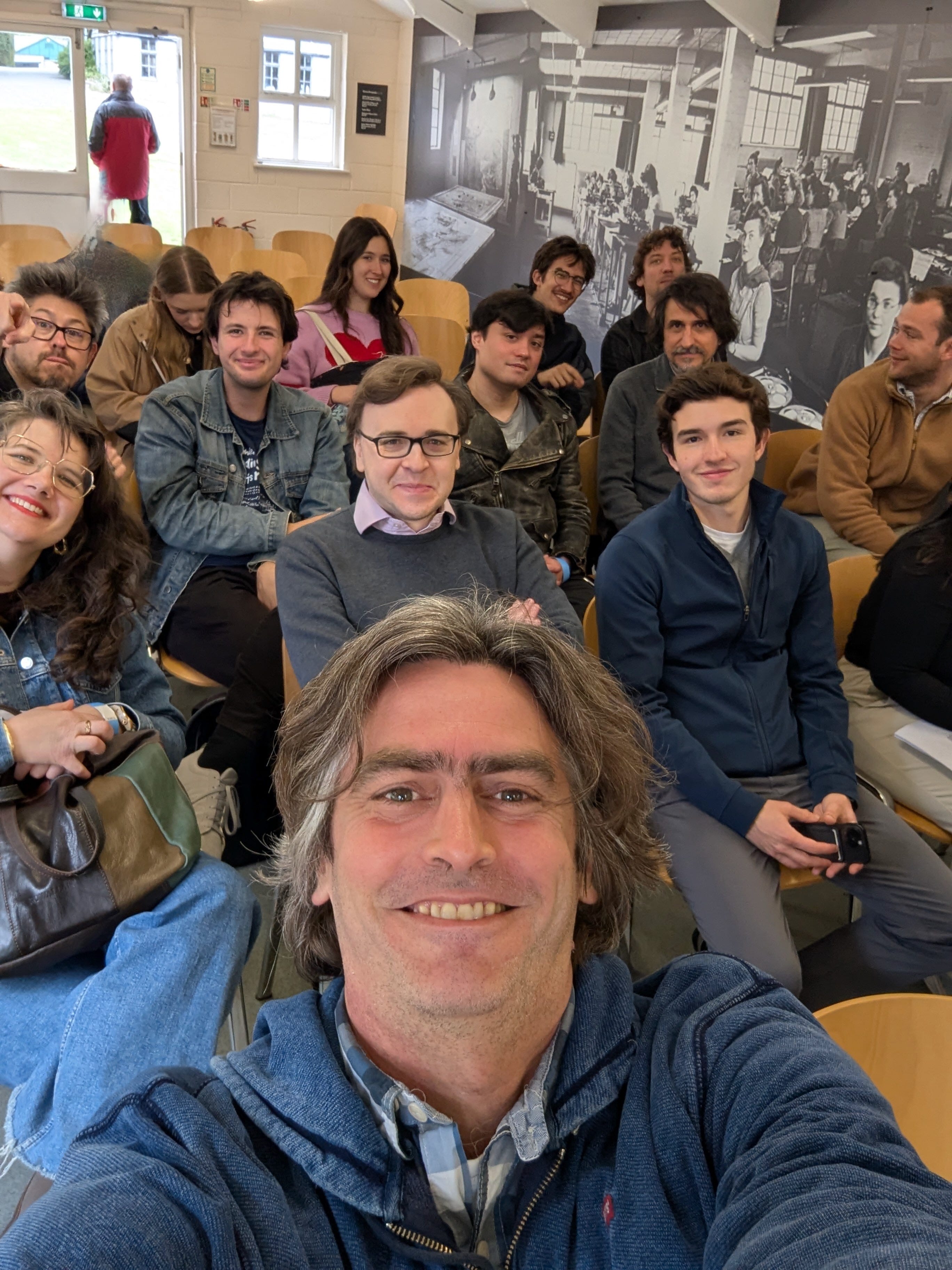
On 6 May 2026, the Computational Philosophy Lab at Northeastern University London visited Bletchley Park to see their Age of AI exhibition. We were joined by student Research Assistants from the Lab and by members of NU London’s Alan Turing Society. Many of the students were from our MA Philosophy and AI or BSc Philosophy and Computer Science programmes. Many thanks to Northeastern University’s Humanities Centre for funding the trip, via its Research Pop-Up scheme, and to Alice Helliwell for organising.
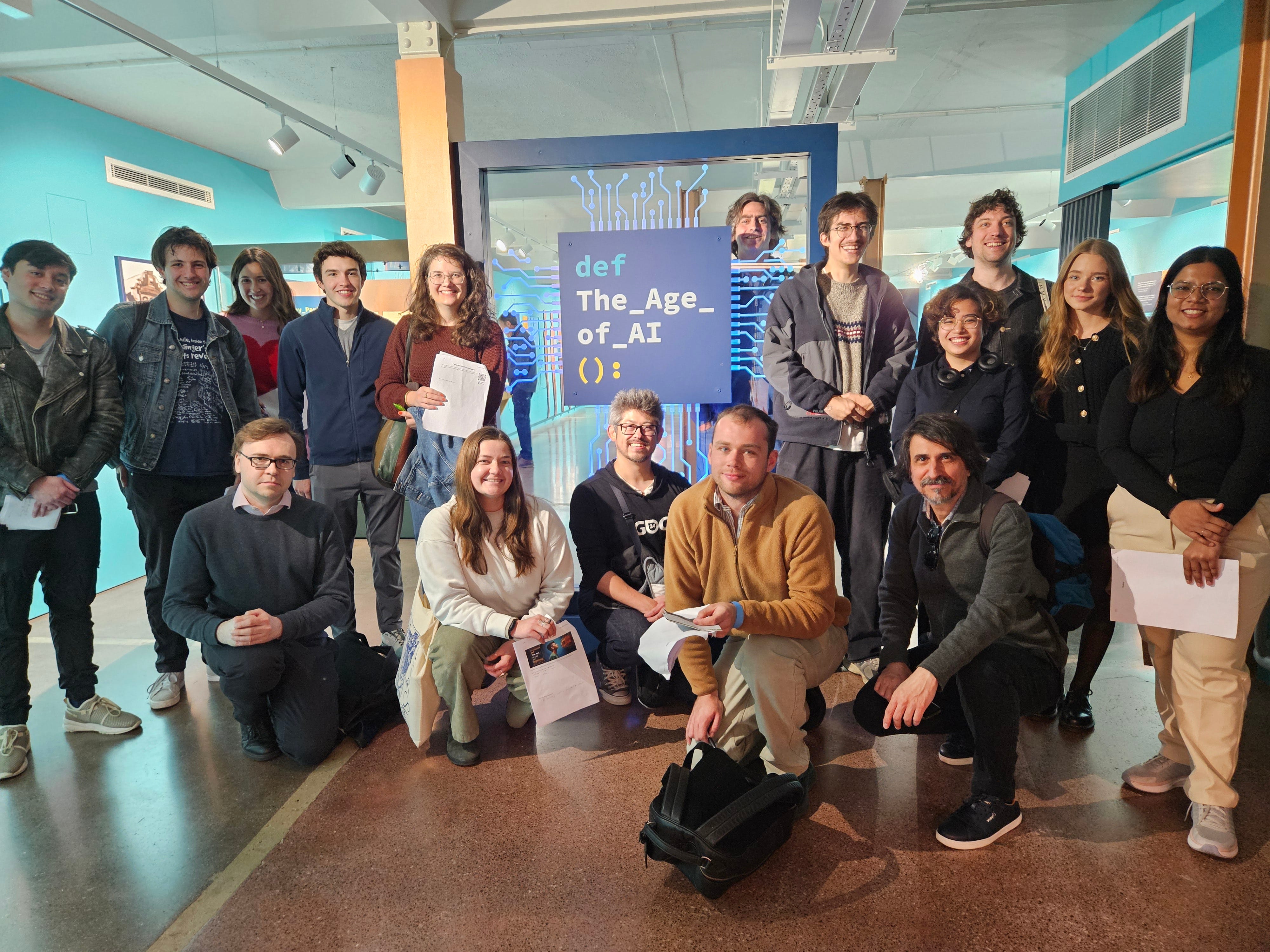
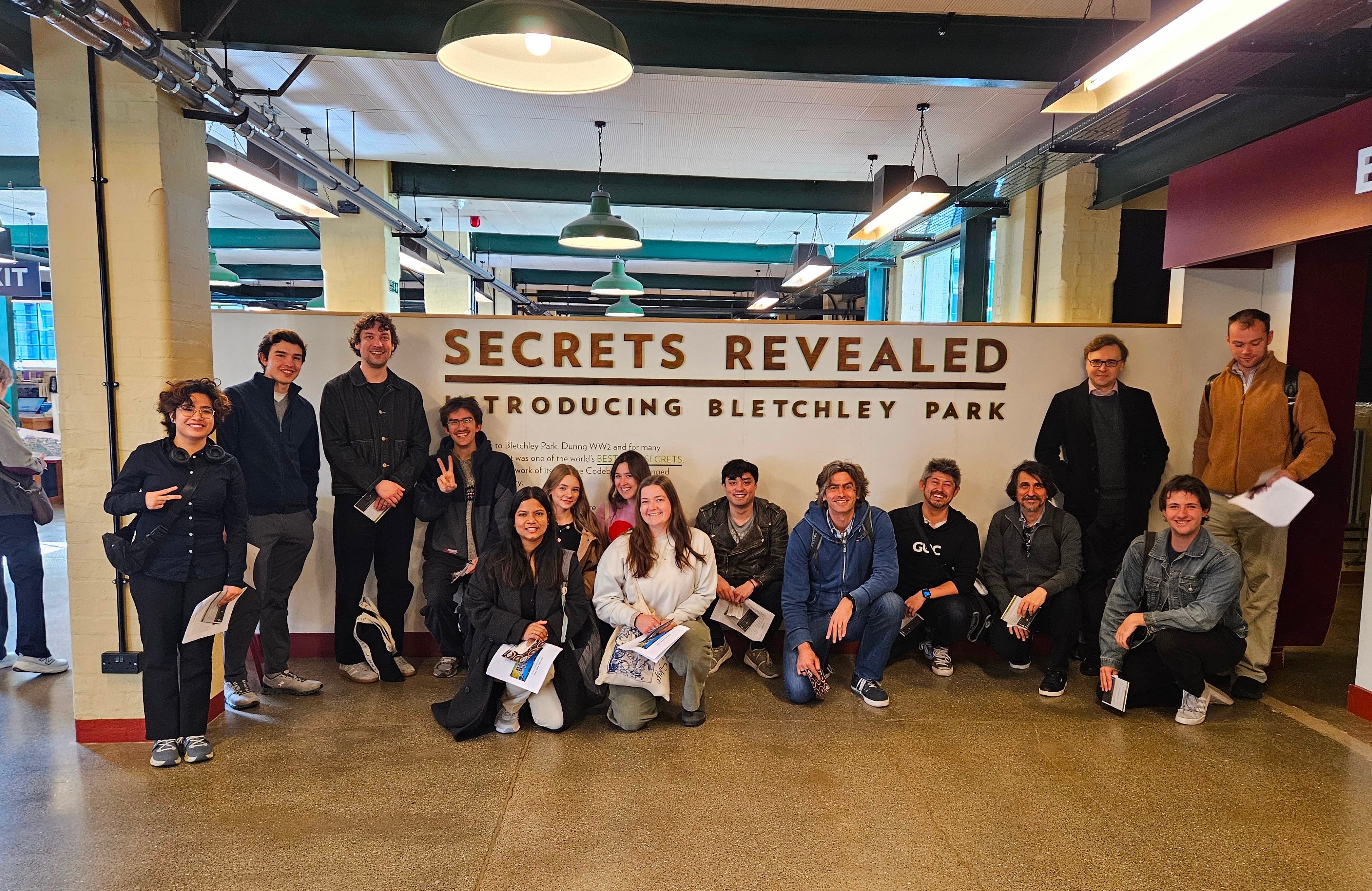
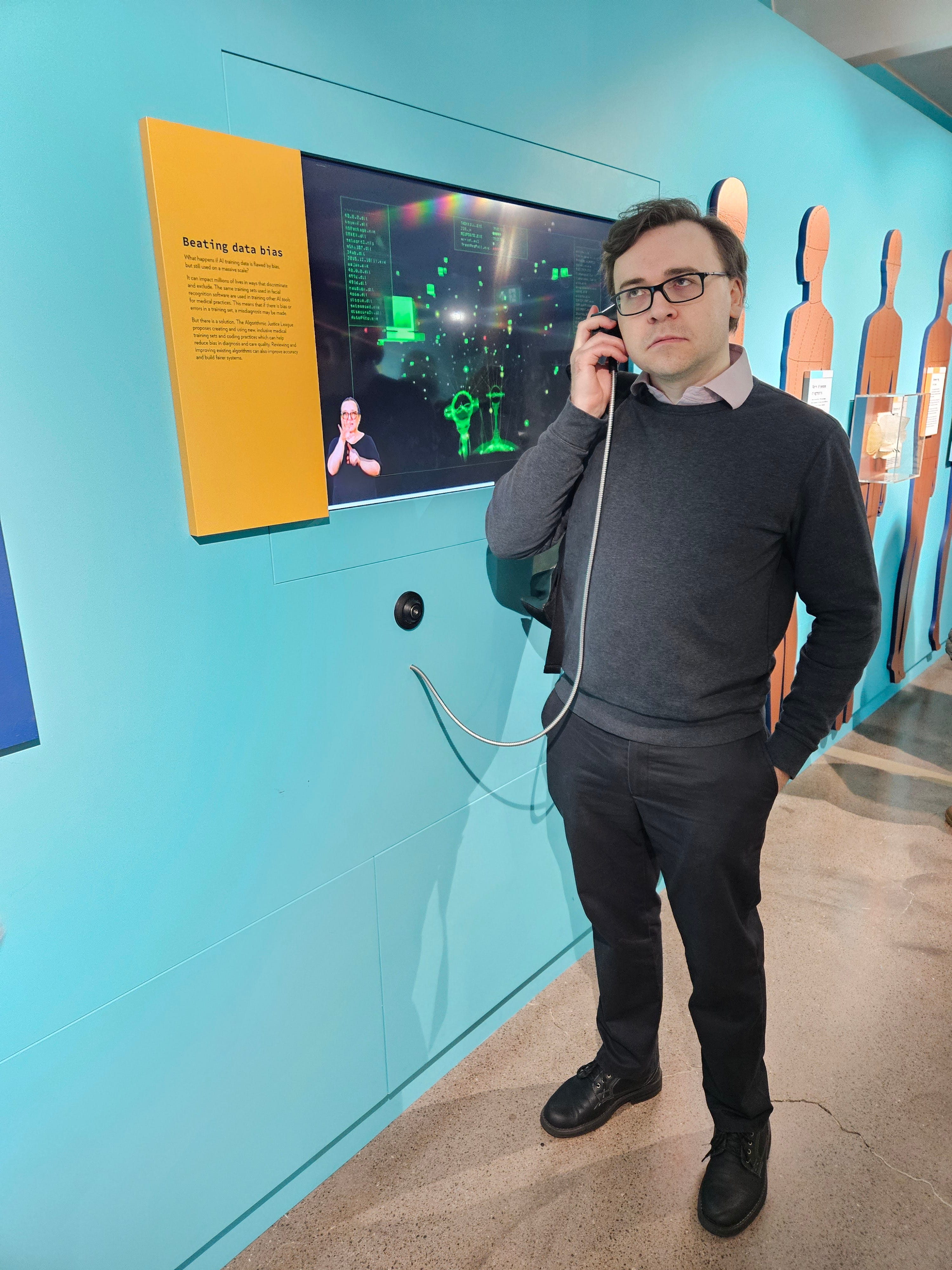
The Age of AI exhibition was funded by the UK Government and was developed around Bletchley’s hosting of the world’s first AI Safety Summit in November 2023. The exhibition covers the history of AI and its pioneers, the role of AI in everyday life, and projections of its future, drawing on expert commentary and pop culture.
The exhibition foregrounds three historic figures with Bletchley Park connections: Alan Turing, Donald Michie, and Irving J. Good. All three were codebreakers at Bletchley during the Second World War and later contributed to the foundations of computer science and AI. Michie and Good are less well known than Turing, but Michie did pioneering work on machine learning, and Good’s work on superintelligence means that his name often surfaces in the current AI safety literature.
Beyond the historical material, the exhibition surveys current applications of AI (for example, in healthcare, environmental science, and the creative industries). The Computational Philosophy Lab is particularly interested in development and application of concepts used in robotics and computing, and their contrast to philosophical usage. As we discussed in our recent paper ‘Autonomy, a family resemblance concept?’ (2024)1 there are key differences between the use of terminology across these fields. We argued there that ‘autonomy’ (for example) functions as a Wittgensteinian family resemblance concept in these fields: a network of overlapping uses with no common essence.
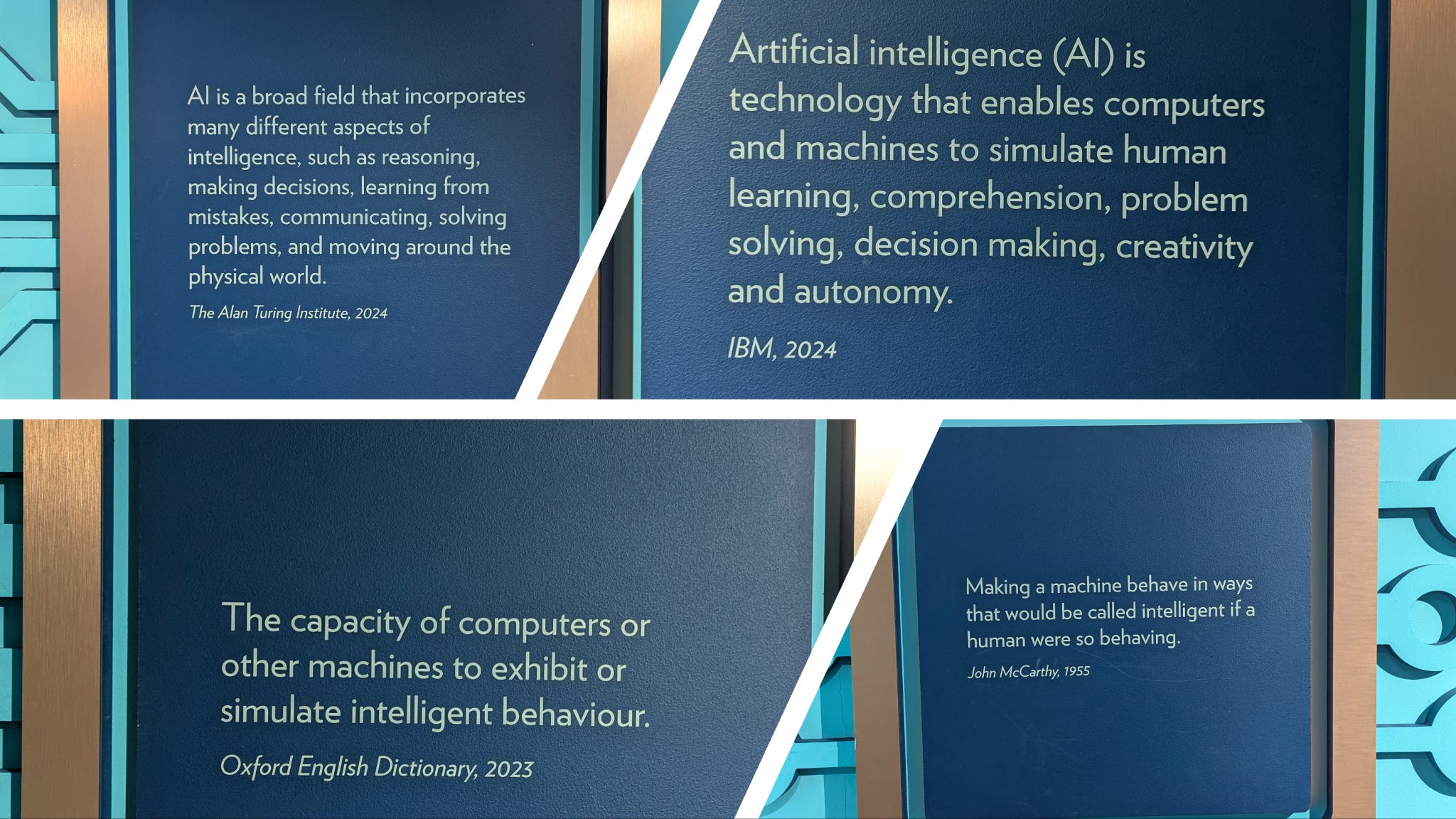
In a similar vein, four definitions of artificial intelligence are presented side by side in the exhibition:
Artificial intelligence (AI) is technology that enables computers and machines to simulate human learning, comprehension, problem solving, decision making, creativity and autonomy. — IBM, 2024
AI is a broad field that incorporates many different aspects of intelligence, such as reasoning, making decisions, learning from mistakes, communicating, solving problems, and moving around the physical world. — The Alan Turing Institute, 2024
The capacity of computers or other machines to exhibit or simulate intelligent behaviour. — Oxford English Dictionary, 2023
Making a machine behave in ways that would be called intelligent if a human were so behaving. — John McCarthy, 1955
The four definitions are not equivalent. IBM and the Turing Institute list some capacities in a way that overlaps but does not coincide. The OED retreats to talk of ‘intelligent behaviour’ without defining ‘intelligent’. McCarthy, seventy years earlier, defines AI in terms of a counterfactual and assumes prior understanding of human intelligence. Each definition is serviceable but they are non-equivalent.
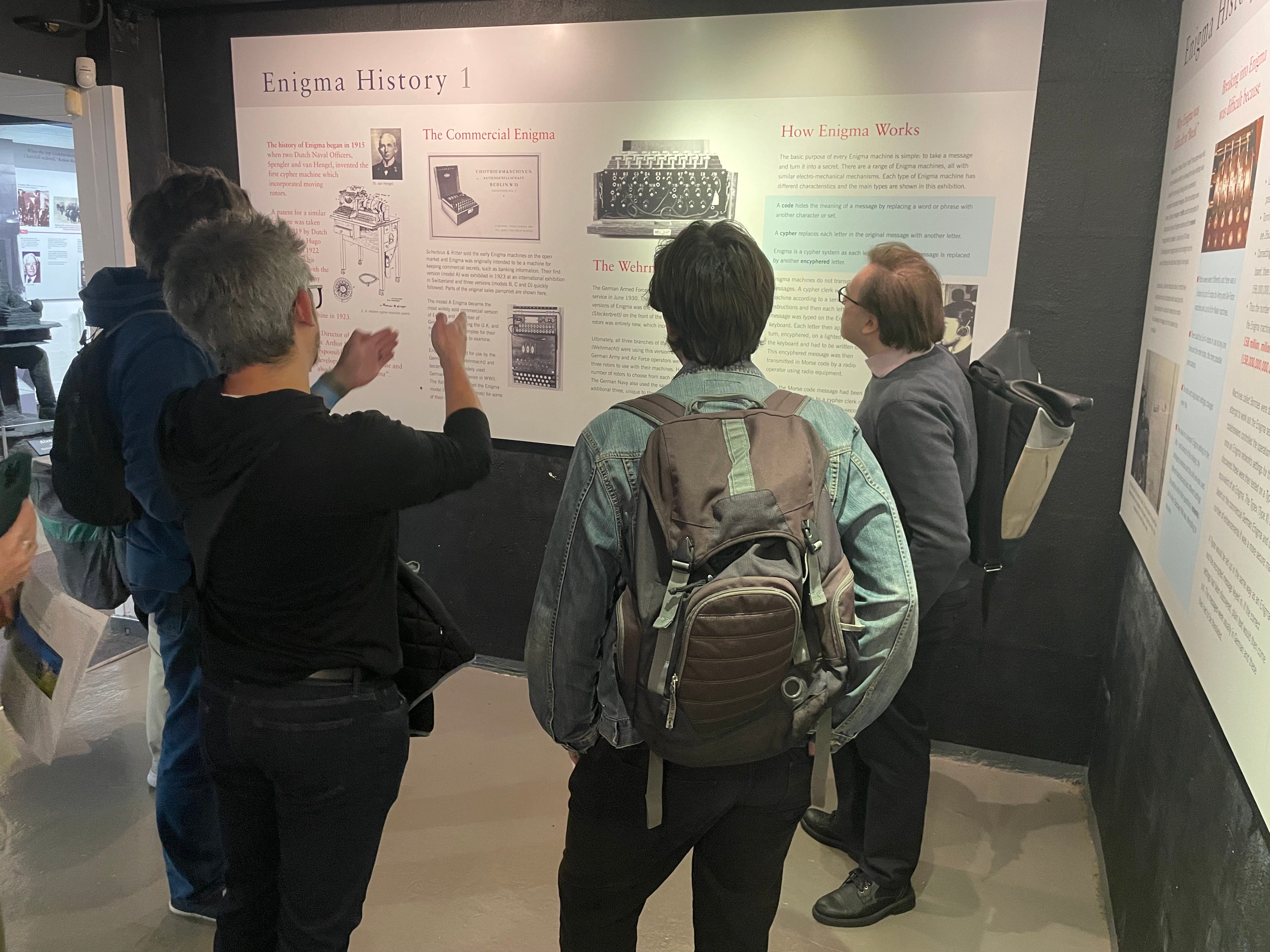
We also enjoyed the permanent exhibitions at Bletchley Park, which focus on codebreaking work during the Second World War. The story of the Bletchley Park operation (made famous by 2014’s The Imitation Game) is both fascinating and surprising. We were struck by the unforeseen consequences of Turing’s highly abstract work on mathematical logic and computation (and his interest in the Entscheidungsproblem and Hilbert’s programme), applied to engineering, warfighting and codebreaking. We should not overstate the extent to which Turing was directly applying his work on computation or mathematical logic at Bletchley. Much of his original contribution to codebreaking work at Bletchley was most directly related to statistics (rather than computation), and the Bombe and Colossus are not direct instantiations of Turing Machines. But Turing’s more abstract and philosophical work must have been at least in the background of his thinking at Bletchley. We also reflected on how surprisingly late the story of Bletchley became public knowledge (around the late 1970s or early 1980s). It must’ve been very strange for researchers on computation, AI and philosophy of mind to find out that Turing, an important yet tragic figure in their field, had such a heroic and impactful secret history. We were also struck by the fact that Bletchley produced a working programmable electronic computer in 1944, but kept it secret for several decades.
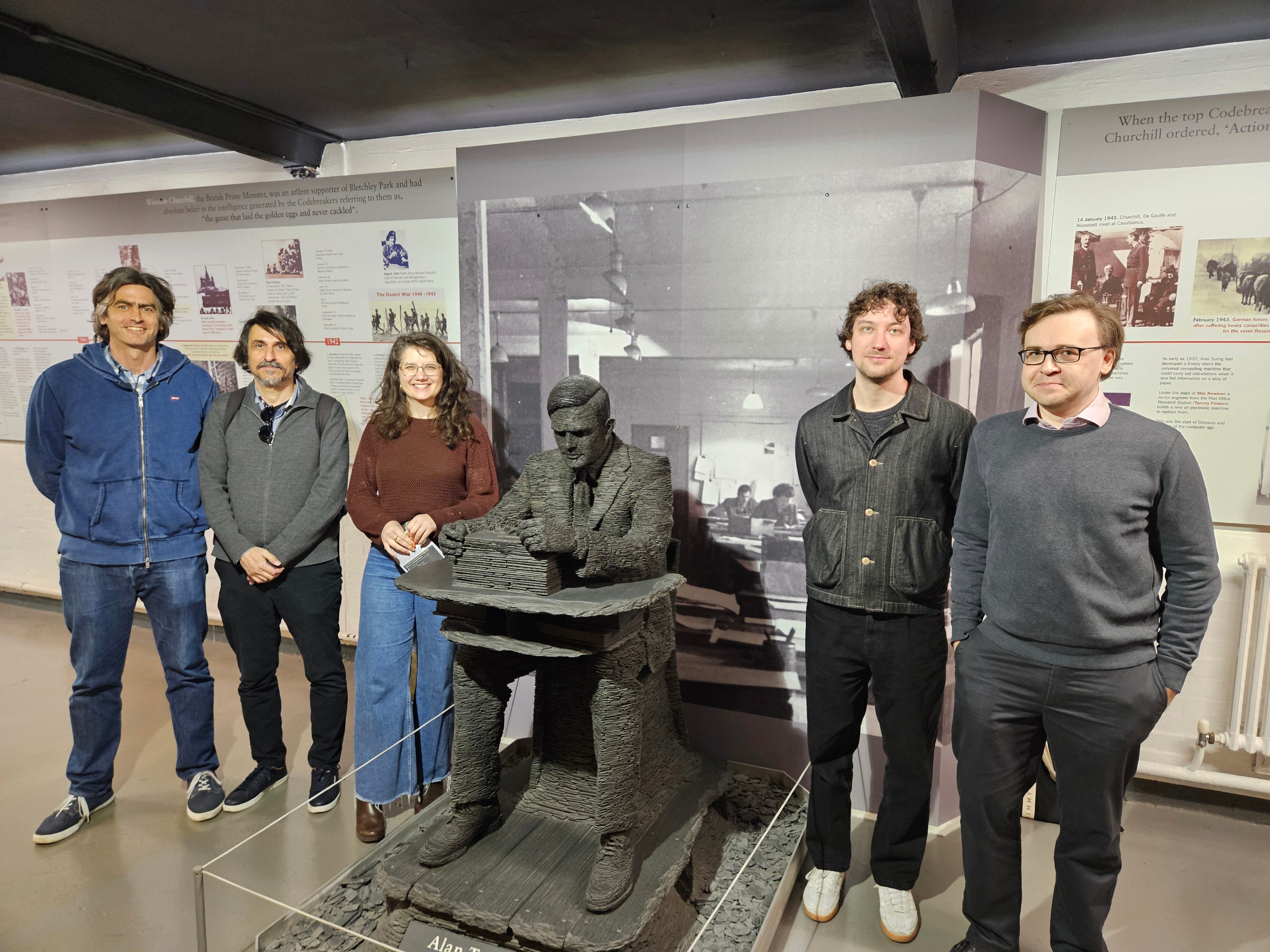
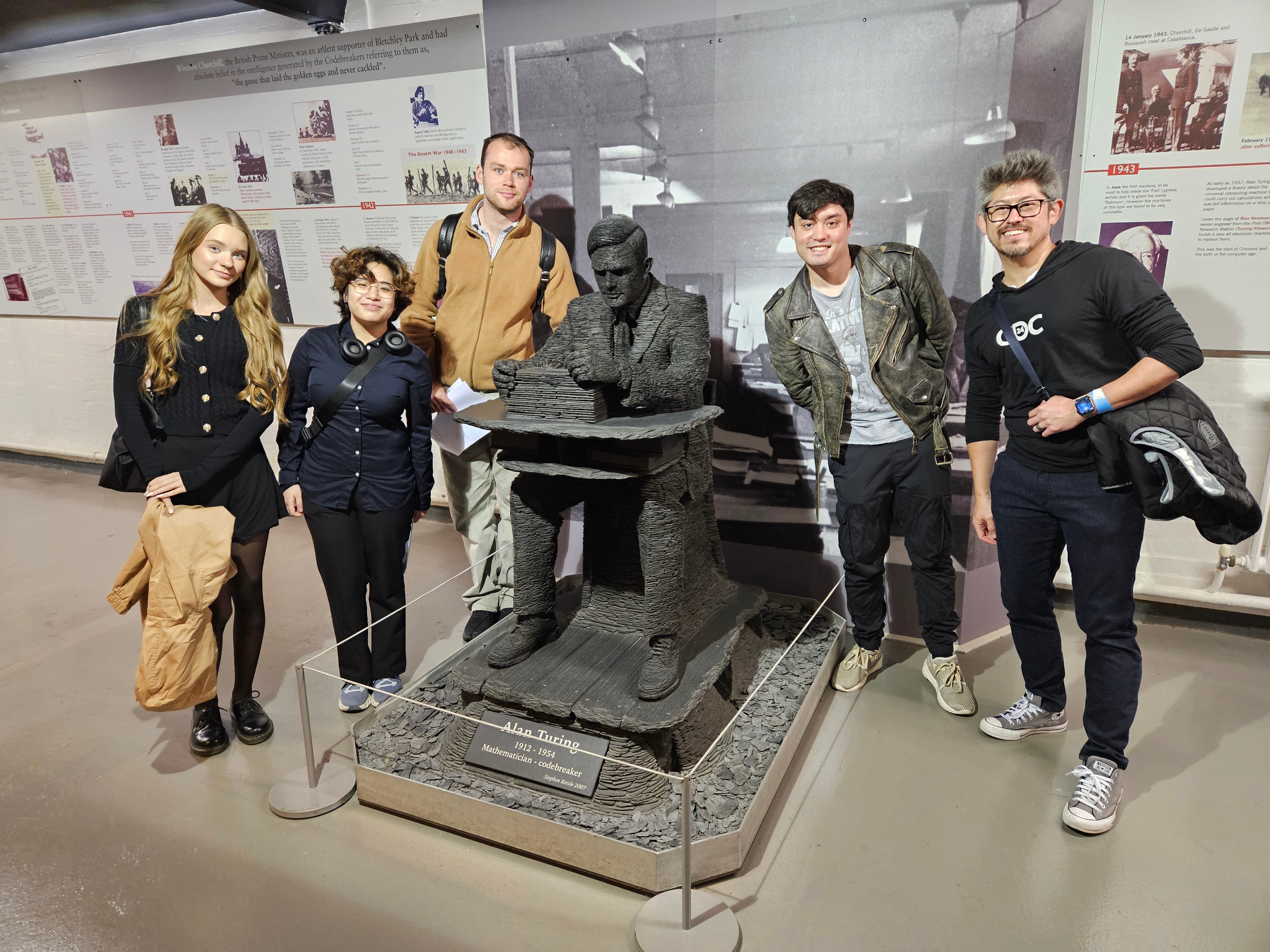
Here are a few student quotes reflecting on the trip, followed by some more photos:
“I found the visit to Bletchley Park to be not only informative, but a welcome change in perception of both computers, mathematics, and history. Seeing the Age of AI exhibition in contrast with the other exhibits left me thinking about the vastness and true scale of our computational power today, something we often take for granted. In particular, I found the presentation of the IBM NorthPole and TrueNorth chips framed in the context of mineral extraction to be a pleasant surprise, and I appreciate that the curators decided to address the physical resources required, rather than just talking about AI as abstract, or in the cloud.” Kylie DeFeo (MSc AI & Ethics)
“Stepping back from the modern trees to see the forest as it has grown helped me contextualize where computation has come from and where it can go. The main thing that stood out to me is the centrality of the humans, that is their insights and strategies, behind the deployment of powerful computational technologies. This maps onto the AI surge we see today: promises of its wide range of capabilities mean nothing without considered, purposeful deployment. Like all tools, the true power lies in the hands of the user.” Alex Bartlett (MA Philosophy & AI)
“The Bletchley Park visit was incredibly informative and interesting. I was very impressed by the interactive section of the AI exhibition that demonstrated how some AI generated images can be difficult to detect from real photographs. This site visit taught me so much and closely aligned with my interdisciplinary studies of computer science, philosophy and history.” Łucja Kwiatkowska (BSc Philosophy & Computer Science)
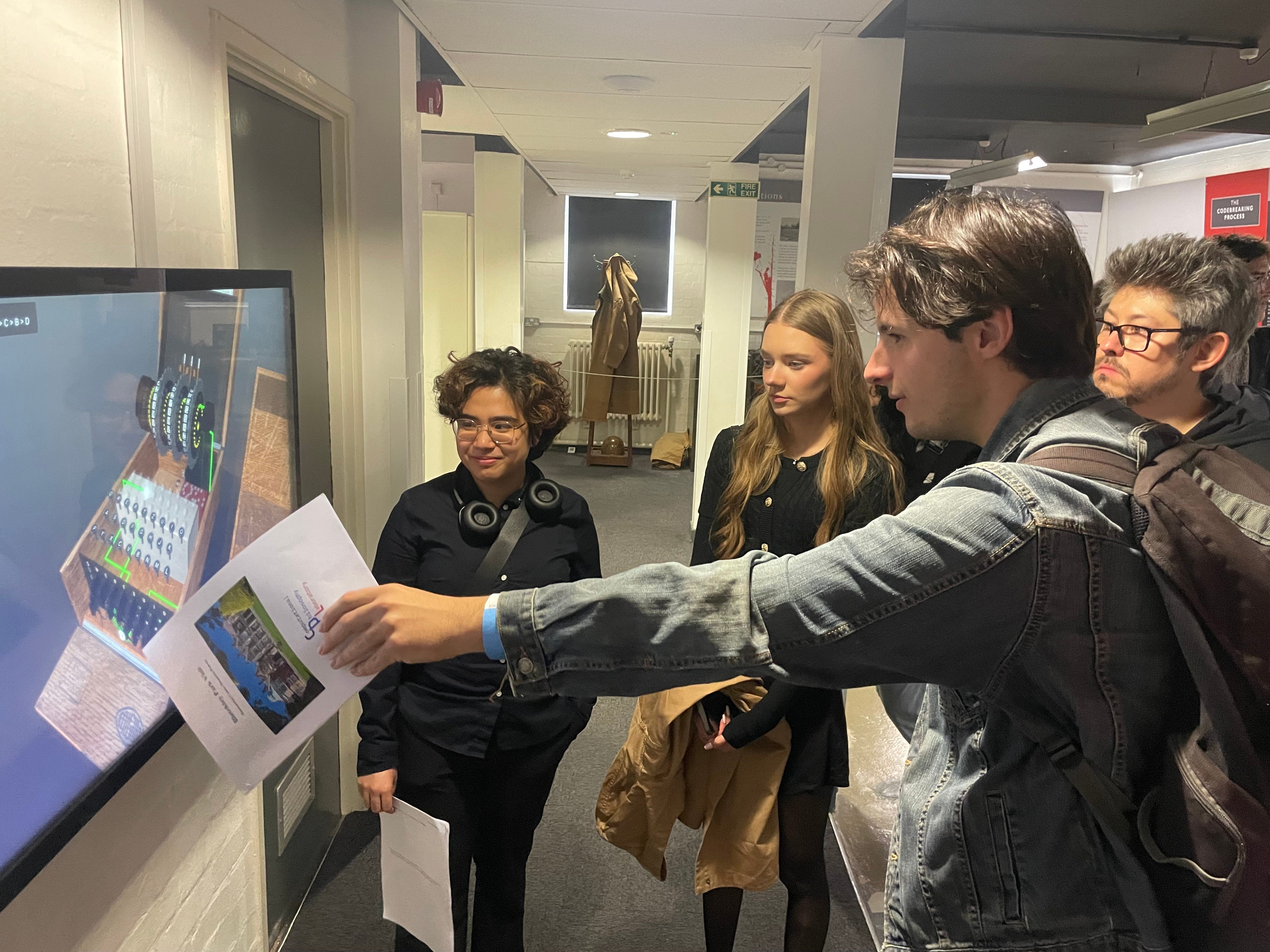
“Visiting Bletchley Park was an amazing experience. After a year of running NUL’s Alan Turing Society I was especially grateful for the opportunity to see firsthand the results of Alan Turing’s work and its rich historical significance. Seeing the original machines was fascinating, especially when being able to interact with simulations of the machines and play the role of the codebreakers in a way. I came away with a much deeper understanding of both the Bombe and Turing’s contributions, alongside deeper insights on how AI has evolved across time, and I found the entire visit very fun.” Lou De Belen (BSc Philosophy & Computer Science)
“Visiting Bletchley Park with the NU London Computational Philosophy Lab brought together several strands that have shaped our discussions within the Alan Turing Society. The visit connected the historical development of computation with the kinds of questions we tend to return to in events and reading groups, particularly around the relationship between formal systems, intelligence and philosophical analysis. The most immediate impression came from how clearly the site presents wartime codebreaking as structured inference under constraint. The reconstructed Bombe and Enigma displays made this concrete in a way that is difficult to replicate in text. They show a process built on systematic elimination, probabilistic narrowing of possibilities and carefully engineered mechanical procedures. The overall picture is less about isolated insight and more about disciplined problem solving carried out under extreme pressure. The guided tour also provided useful context for aspects of Turing’s life that are often reduced to anecdote. His cycling to Bletchley with a gas mask during hay fever season, and his habit of working around a recurring fault in his bicycle chain by counting pedal rotations rather than repairing the mechanism, were presented as part of the working environment at Bletchley. Framed in that way, they read less as eccentric detail and more as expressions of a procedural way of thinking applied consistently to practical constraints.” Marco Leone (MA Philosophy & AI)
Collins, E. C., Ball, B., Helliwell, A. C., Marble, J. L., & Baker, J. D. (2024). ‘Autonomy: A family resemblance concept? An exploration of human-robot teams’. In Interdependent human-machine teams: The path to autonomy. Elsevier.